
Technology evolves daily and business challenges are increasingly complex, traditional education alone no longer equips talent for success. Memorizing frameworks or attending lectures is useful, but it rarely prepares professionals for the unpredictable, real-world scenarios they will face. That’s where experiential learning steps in and why it’s becoming the shortcut to future-ready skills.
Learning by Doing: Why Experience beats Theory
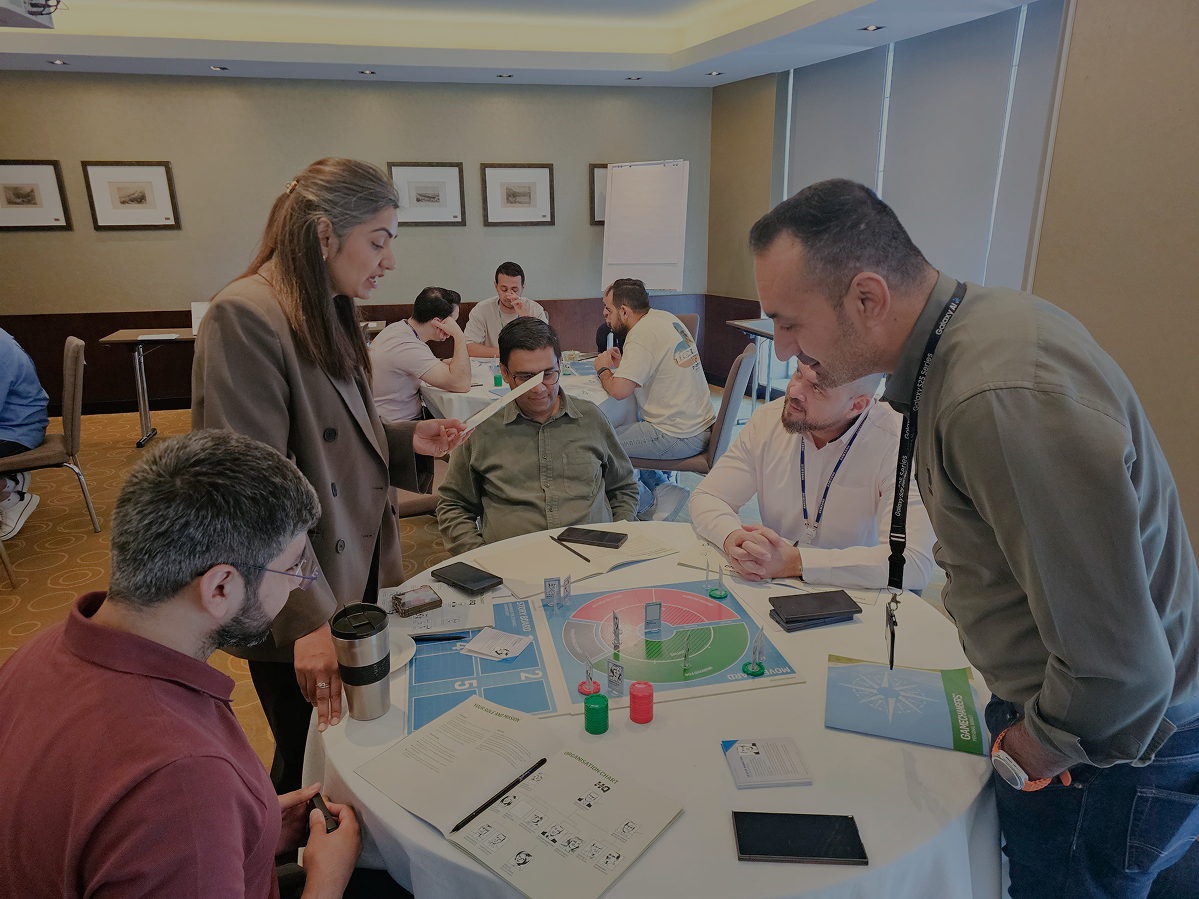
Experiential learning immerses participants in challenges that mirror real life, letting them make decisions, see the consequences, and reflect on what works, and what doesn’t. This is how learning becomes tangible, memorable, and actionable.
Imagine a team tasked with a business simulation where every choice affects a virtual company’s performance. Or a leadership workshop where participants navigate high-pressure scenarios, make tough calls, and immediately see the outcomes. In these moments, theory meets reality, and critical skills – like decision-making, collaboration, and adaptability – take root in a way that reading a textbook never could.
Some of the most valuable skills that emerge from experiential learning include:
- Critical Thinking in Context: Learners practice analyzing complex problems, prioritizing actions, and making decisions under pressure.
- Resilience and Adaptability: Realistic scenarios challenge participants to pivot, recover, and navigate uncertainty, preparing them for anything the future holds.
- Collaboration and Communication: Team-based activities highlight the importance of listening, negotiating, and leveraging diverse perspectives.
- Confidence through Reflection: Experiencing the consequences of decisions in a safe environment builds not only skills but self-assurance.
Beyond Training: Real-World Application
The magic of experiential learning lies in its immediate transfer to the workplace. When participants tackle simulations, role-playing exercises, or project-based challenges, they aren’t just practicing, they’re developing behaviors and mindsets that stick. This is what separates a good training program from one that truly transforms performance.
And the best part? Experiential learning doesn’t just prepare people to follow processes, it prepares them to lead, innovate, and influence. It turns learners into problem-solvers, teams into high-functioning units, and managers into leaders who can navigate ambiguity with confidence and empathy.
Preparing Talent for the Future
The workforce of tomorrow isn’t looking for employees who can memorize answers. It needs professionals who can think critically, act decisively, and collaborate effectively, even when conditions are uncertain. Experiential learning provides organizations with a practical pathway to develop these capabilities: faster, deeper, and more reliably than traditional methods.
So here’s the question for leaders and L&D professionals: Are you just teaching knowledge, or are you creating experiences that shape the leaders and teams of tomorrow?
At HDS, we design experiential learning journeys that bring strategy, practice, and reflection together, helping teams not only learn but perform, innovate, and thrive in the future of work.
Frequently Asked Questions (FAQs)
1. What does a leadership training company Dubai do?
A leadership training company Dubai provides professional development programs that help managers and executives improve leadership skills such as communication, decision-making, teamwork, and strategic thinking.
2. What is experiential leadership training?
Experiential leadership training is a learning approach where participants develop leadership skills through hands-on activities, simulations, and real-world challenges instead of traditional lectures.
3. Is classroom-based leadership training still effective?
Yes, classroom training is useful for teaching leadership theories, management frameworks, and foundational knowledge. However, it works best when combined with practical exercises.
4. Why do companies prefer experiential training?
Experiential training improves engagement, knowledge retention, teamwork, and real-world skill application, making it highly effective for leadership development.
5. How long does a leadership training program usually last?
Leadership programs can range from one-day workshops to multi-week development programs depending on the organization’s goals and leadership level.
6. Who should attend leadership training programs?
Leadership training is beneficial for managers, team leaders, executives, supervisors, and employees preparing for leadership roles.
Written by Human Development Solution, experiential learning and leadership development specialists with extensive experience designing business simulations for companies and customized learning journeys for organizations across the Middle East.