
You want teams that work together smoothly and stay invested in their work. Corporate experiential learning meets that need by shifting development from passive sessions to practical, shared experiences that mirror real workplace challenges. Corporate experiential learning improves team collaboration and engagement by placing you in hands on activities where communication, trust, and problem solving develop through action, not theory.
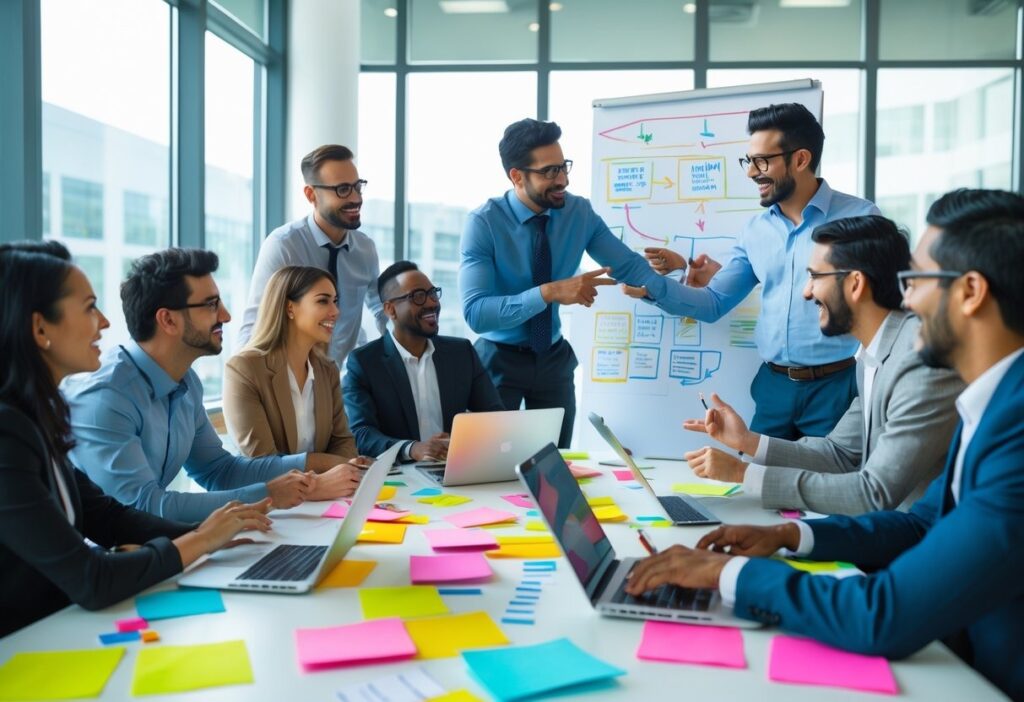
When you learn by doing, you practise skills in context and see immediate impact. Teams tackle realistic tasks, make decisions together, and reflect on outcomes, which strengthens alignment and accountability.
A simple example includes short simulations or project based workshops that reveal how different working styles affect results.
You also increase engagement because learning feels relevant and purposeful. Well designed programmes show you how to apply insights at work, address common barriers like time and motivation, and build habits that last beyond the session. Along the way, you gain practical strategies, understand common challenges, and find clear answers to common questions about making experiential learning work at scale.
Understanding Corporate Experiential Learning
Corporate experiential learning focuses on how you build skills through direct action at work. It links real tasks to reflection, feedback, and measurable performance gains. You use it to improve collaboration, engagement, and shared accountability across teams.
Definition and Core Principles
Corporate experiential learning means you learn by doing work that mirrors real business conditions. You tackle problems, make decisions, and review outcomes with your team. This approach strengthens collaboration because everyone contributes to shared goals.
Three core principles guide effective programmes: active participation, structured reflection, and application to the job. Active participation keeps you engaged beyond listening. Reflection turns action into insight through debriefs and peer feedback. Application ensures skills transfer to daily work within days, not months.
A practical tip: Design activities to fit normal working blocks, such as 90 minutes (about 1.5 hours), to avoid disrupting delivery. Short cycles improve focus and retention.
Types of Experiential Learning Activities
You can use several activity types, each suited to different team needs. Simulations recreate business scenarios, such as client negotiations or project planning. Role playing builds communication skills in a controlled setting.
Other common formats include:
- Real world projects that solve live business issues
- Team challenges that test collaboration under time pressure
- Problem solving workshops using your own data and constraints
For example, a cross functional team might redesign a workflow during a half day session, then test it the same week. Hands on formats increase engagement because you see immediate results. Keep group sizes between 5–8 people to support discussion without slowing progress.
Comparing Experiential Learning to Traditional Training
Traditional training often relies on presentations and manuals. You absorb information, then return to work with limited follow through. Experiential learning embeds practice into the learning itself.
| Aspect | Traditional Training | Experiential Learning |
| Learner role | Listener | Active contributor |
| Team interaction | Limited | Central |
| Skill transfer | Delayed | Immediate |
| Engagement level | Variable | Consistently higher |
When you practise skills in context, teams align faster and communicate more clearly. You also spot gaps early and adjust behaviour in real time, which supports sustained collaboration and engagement.
Key Benefits for Team Collaboration
Corporate experiential learning improves how you communicate, build trust, and solve problems together. Hands on activities place your team in realistic situations where behaviours, not titles, shape outcomes.
Developing Stronger Communication
Experiential learning strengthens communication by requiring you to exchange clear, timely information under real constraints. Activities such as simulations or role based challenges force you to listen, clarify intent, and adjust tone when pressure rises.
You practise giving concise updates, asking direct questions, and confirming understanding. These habits transfer to meetings, project handovers, and cross team work.
What improves most during experiential sessions
- Active listening through immediate feedback
- Shared language around goals and risks
- Faster alignment on priorities and next steps
Tip: Debrief after each activity and name one communication behaviour to repeat at work the same week. Teams that do this see quicker adoption.
Enhancing Trust Among Team Members
Trust grows when you rely on each other to complete tasks with visible consequences. Experiential learning creates low risk environments where you test reliability, judgement, and follow through without damaging real projects.
You see how colleagues act when plans change or resources run short. This transparency reduces assumptions and encourages respect for different working styles.
| Trust driver | How experiential learning supports it |
| Reliability | Tasks require on time delivery to succeed |
| Psychological safety | Mistakes become learning points, not failures |
| Accountability | Group outcomes depend on individual actions |
Fun fact: Short, well designed sessions of 2-4 hours often build more trust than months of routine meetings.
Fostering Problem Solving Skills
Hands on challenges sharpen how you analyse problems and test solutions together. You work with incomplete information, shifting rules, and limited time, which mirrors real business conditions.
You practise breaking issues into parts, debating options, and choosing actions based on evidence rather than hierarchy. Teams learn to run quick experiments and adjust fast.
Practical problem solving habits you develop
- Define the problem before proposing solutions
- Use diverse perspectives to reduce blind spots
- Review outcomes and refine decisions
Hint: Assign rotating decision leads during activities. This builds shared ownership and prepares more people to lead under pressure.
Enhancing Engagement through Experiential Learning
Experiential learning raises engagement by linking work tasks to realistic challenges you recognise. It increases motivation, draws people into active roles, and shapes daily behaviours that support collaboration and trust.
Increasing Employee Motivation
You motivate employees when learning mirrors their real responsibilities and decisions. Simulations, role play, and problem solving exercises connect effort to visible outcomes, which strengthens personal ownership.
Short, time‑bound activities work well. A 45‑minute workshop can achieve more focus than a half‑day lecture because you ask participants to act, decide, and adapt in real time.
Ways to raise motivation through design
- Use scenarios drawn from your actual projects and clients
- Set clear success criteria before the activity starts
- Include peer feedback rather than manager only evaluation
A useful tip: Rotate leadership roles during exercises so quieter team members lead at least once. This simple change often increases confidence and persistence.
Boosting Participation and Involvement
You increase participation when everyone has a defined role and shared accountability. Experiential formats reduce passive observation by requiring input at each stage of the task.
Group challenges work best when they limit group size. Teams of 4-6 people encourage contribution without overwhelming discussion. You also gain clearer communication and faster decision making.
Common participation drivers
- Hand on tools such as prototypes, mock dashboards, or case packs
- Real time constraints, such as completing a task within 30 minutes
- Immediate debriefs focused on actions, not personalities
Fun fact: People remember practical tasks better than slide based sessions because they link actions to outcomes. This effect supports sustained engagement after the session ends.
Cultivating a Positive Workplace Culture
You shape culture through repeated experiences, not one off messages. Experiential learning embeds collaboration, respect, and problem solving into everyday behaviour.
Shared challenges help teams practise trust in a controlled setting. When employees rely on each other to succeed, they build habits that transfer to the workplace.
Cultural signals reinforced through experiential learning
- Open communication during pressure
- Constructive handling of mistakes
- Shared ownership of results
To strengthen impact, align activities with your company values and reward behaviours you want repeated. Over time, these experiences support how corporate experiential learning improves team collaboration and engagement across teams.
Strategies for Implementing Experiential Learning Programmes
You improve collaboration and engagement when you plan experiential learning with intent, structure, and evidence. Effective programmes tie activities to business priorities, rely on sound design, and track outcomes that matter to teams and leaders.
Aligning Activities with Organisational Goals
You start by linking each learning activity to a clear business outcome, such as faster project delivery or improved cross team communication. This connection keeps teams focused and helps leaders support the programme.
Map goals to behaviours before you design tasks. For example, if you want stronger collaboration, require shared decision making under time pressure.
Practical alignment checklist:
- Define one primary goal per activity.
- Link tasks to real projects or current challenges.
- Set success criteria managers already track, such as cycle time or error rates.
You strengthen engagement when teams see how learning supports their day-to-day work.
Designing Effective Learning Experiences
You design experiences that require action, reflection, and adjustment. Simulations, role playing, and problem solving exercises work best when they mirror real constraints.
Keep sessions focused and physical where possible. A workshop using a 500 sq ft room (46 sq m) allows movement, group work, and rapid iteration.
Design tips that work in practice:
- Limit activities to 90 minutes to maintain energy.
- Build in short reflection pauses after each task.
- Rotate roles so every participant leads once.
You increase impact when facilitators guide discussion without controlling outcomes.
Measuring Success and Gathering Feedback
You measure success by tracking behaviour change, not attendance. Use data you already collect, then add targeted feedback.
Combine quantitative and qualitative inputs to get a full picture.
| What to Measure | How to Measure | When |
| Collaboration quality | Peer scoring | End of session |
| Engagement | Participation rate | During activity |
| Skill transfer | Manager observation | 30 days later |
You improve future sessions by acting on feedback quickly. Short surveys and brief interviews often reveal simple fixes that raise engagement in the next cycle.
Challenges and Solutions in Corporate Experiential Learning

You face practical barriers when you move from traditional training to hands on learning. The most common issues involve resistance, uneven relevance across roles, and fading engagement after the initial rollout.
Overcoming Resistance to Change
You often meet scepticism from employees who feel comfortable with lectures or online modules. Address this by linking each activity to a clear job outcome, such as faster project handovers or fewer customer escalations.
Start small and visible. Pilot a 2-3 hour workshop with one team and share concrete results, like reduced rework or clearer role ownership.
Tactics that work
- Use real company data instead of generic case studies.
- Involve line managers as participants, not observers.
- Explain the “why” in plain language before the session starts.
Fun fact: Teams that practise problem solving together remember processes better than those who only discuss them, because you engage both action and reflection.
Ensuring Relevance to Diverse Teams
You risk losing impact when activities ignore differences in roles, cultures, or experience levels. Design scenarios that mirror daily work, whether that means a sales negotiation, a safety drill, or a cross team planning exercise.
Build modular activities. You can run the same core simulation while adjusting inputs, constraints, or success criteria for each group.
Design checklist
- Tie each task to a specific capability, such as decision making or conflict handling.
- Allow role choice so participants play parts that stretch their skills.
- Ensure the space supports movement, ideally at least 10 ft (3 m) per group.
This approach keeps the learning practical without fragmenting your programme.
Maintaining Engagement Over Time
You lose momentum when experiential learning feels like a one off event. Plan for repetition and progression instead of isolated sessions.
Use short, recurring formats. A 90 minute simulation every quarter often works better than a single full day event.
Ways to sustain engagement
- Rotate facilitators to bring fresh perspectives.
- Add light gamification, such as team scorecards tied to real KPIs.
- Schedule quick reflection moments within 48 hours to lock in learning.
When you treat experiential learning as an ongoing practice, you support continuous skill development and stronger collaboration.
Frequently Asked Questions
Corporate experiential learning uses practical activities to build communication, trust, and shared problem solving. You see higher engagement when teams practise real work scenarios, supported by clear goals and the right tools.
What are the benefits of experiential learning for team collaboration within companies?
You improve collaboration by placing your team in structured tasks that require joint decisions and shared accountability. Activities such as role played client meetings or timed problem solving drills make communication gaps visible and correctable.
You also build trust faster because people rely on each other to complete tasks. A useful tip is to debrief for 10–15 minutes after each activity to lock in lessons while they feel fresh.
How does hands on learning enhance engagement among team members?
You keep attention high when people learn by doing rather than listening. Short, active sessions reduce distraction and encourage participation from quieter team members.
Hands on tasks create immediate feedback, which boosts motivation.
Fun fact: People remember more from activities they perform than from slides they read.
Can experiential learning approaches impact team performance outcomes?
You can link experiential learning to performance when activities mirror real job challenges. Teams practise prioritisation, conflict management, and decision making under realistic pressure.
Over time, you often see faster project delivery and fewer communication errors. Track outcomes with simple metrics such as missed deadlines or rework hours per week.
What strategies can be employed to integrate experiential learning into corporate training effectively?
You start by aligning each activity with a clear business goal, not a vague skill. Keep sessions short, such as 60–90 minutes, and schedule them around active projects.
You should brief participants before and after each exercise. This habit helps you connect learning directly to daily work.
How does interactive learning compare to traditional learning methods in fostering teamwork?
You get stronger teamwork from interactive learning because it requires cooperation in real time. Traditional lectures often limit interaction to questions at the end.
Interactive methods surface different working styles early. This awareness helps you assign roles more effectively in future projects.
What role does technology play in facilitating experiential learning for teams?
You can use technology to simulate real scenarios through virtual workshops, collaboration platforms, and simple gamified tools. These options work well for hybrid or remote teams.
Shared digital whiteboards and breakout rooms support equal participation. A practical hint is to test tools in advance to avoid losing momentum during the activity.
Written by:-
Human Development Solution, experiential learning and leadership development specialists with extensive experience designing business simulations for companies and customized learning journeys for organizations across the Middle East.